Artist Interview
In Conversation with Jaime Sancorlo: War, Childhood, and the Absurdity of Conflict
Your paintings are deeply rooted in historical imagery. Where does your creative process begin?
My work begins with black-and-white photographs, mostly sourced from archives of the First and Second World Wars. I spend a long time selecting and editing images, laying many of them out before me until certain scenes naturally stand out.
There is often an intuitive moment—a kind of creative impulse—through which I recognize an image as the starting point for a future painting.
These archival photographs already carry a strong emotional and historical weight. I reinterpret them through painting, usually in a realistic style, though the level of detail changes depending on the needs of each work.
From Archive to Canvas
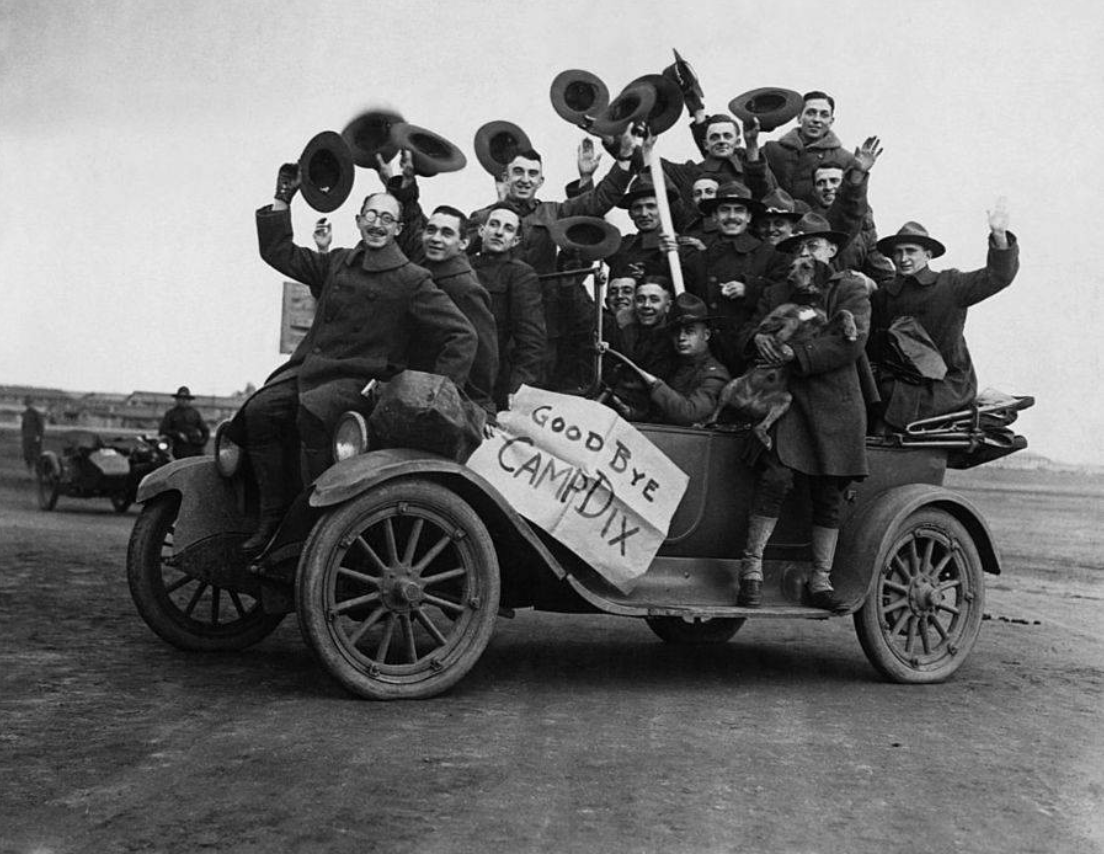
"GOOD BYE CAMP DIX" — soldiers waving farewell
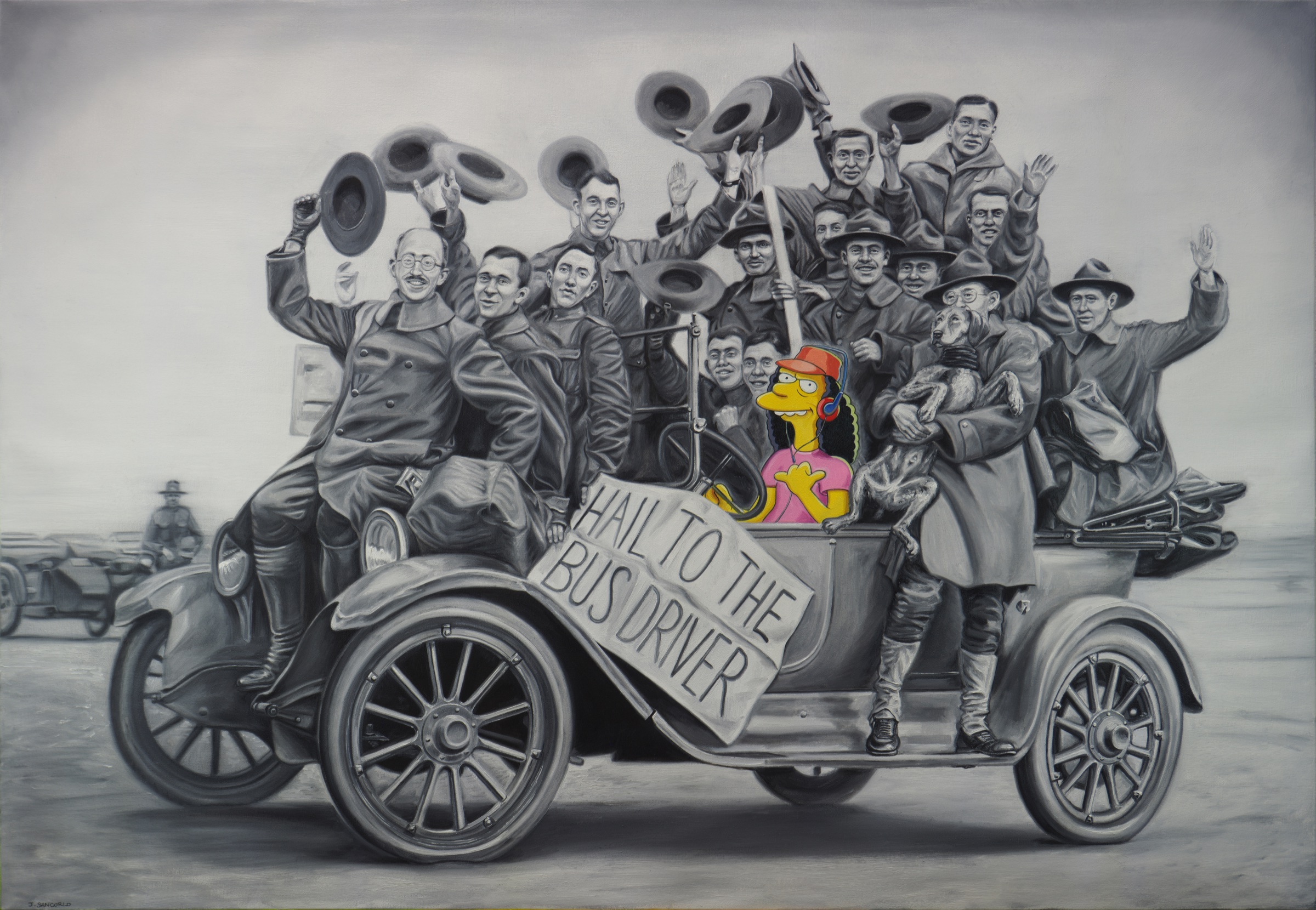
Oil on canvas — sign repurposed, cartoon figure inserted
Sancorlo reinterprets archival war photography by inserting playful, surreal elements into solemn historical scenes — here, a cartoon character replaces the bus driver, and the sign is reimagined as a tribute.
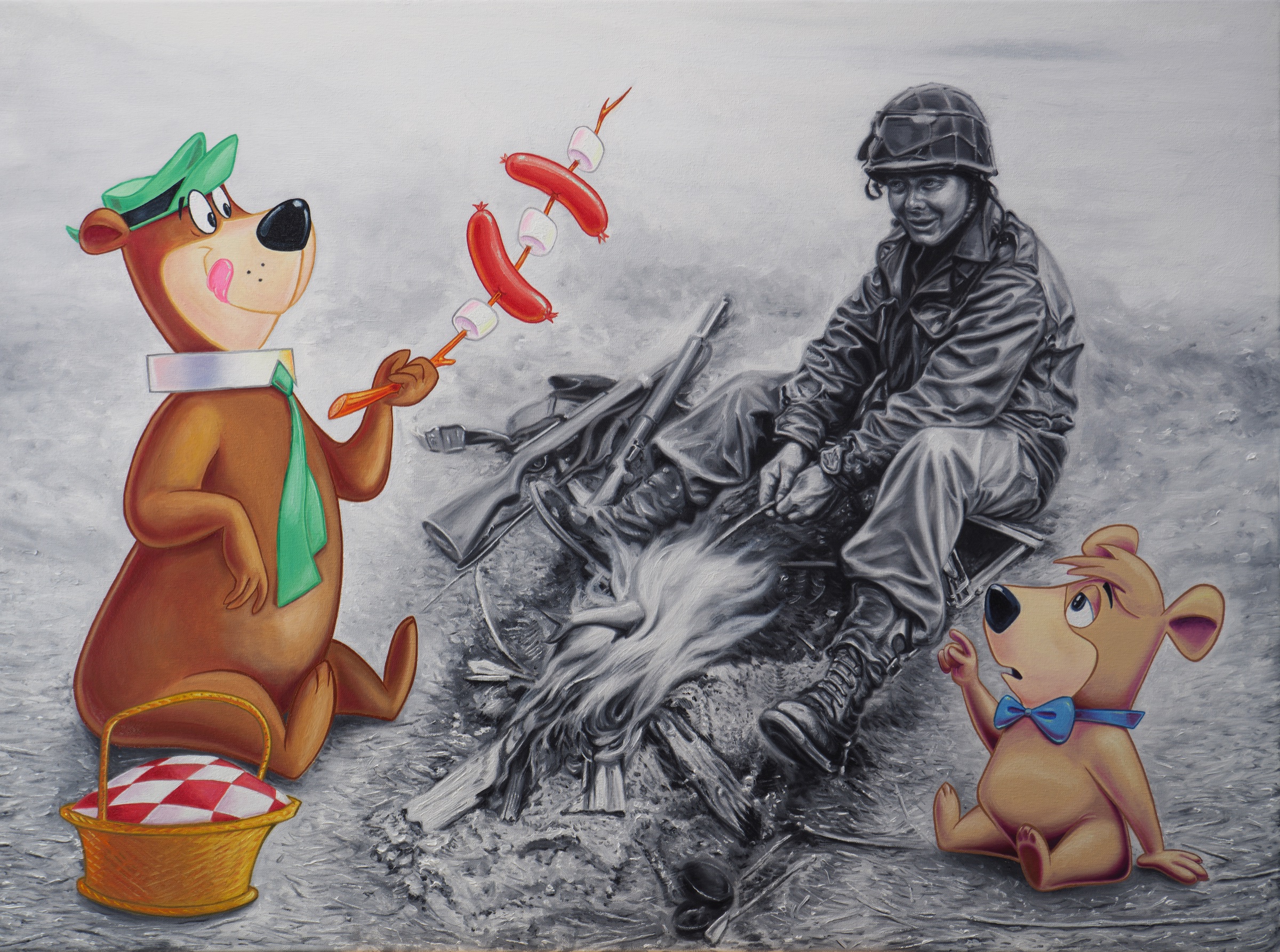
Bearbecue, 73×100cm, 2022 — A surreal garden party scene where soldiers in historical uniforms grill food while a giant teddy bear looms over them, blending wartime austerity with playful absurdity.
Your paintings often combine realistic war imagery with colourful and playful elements. Why this contrast?
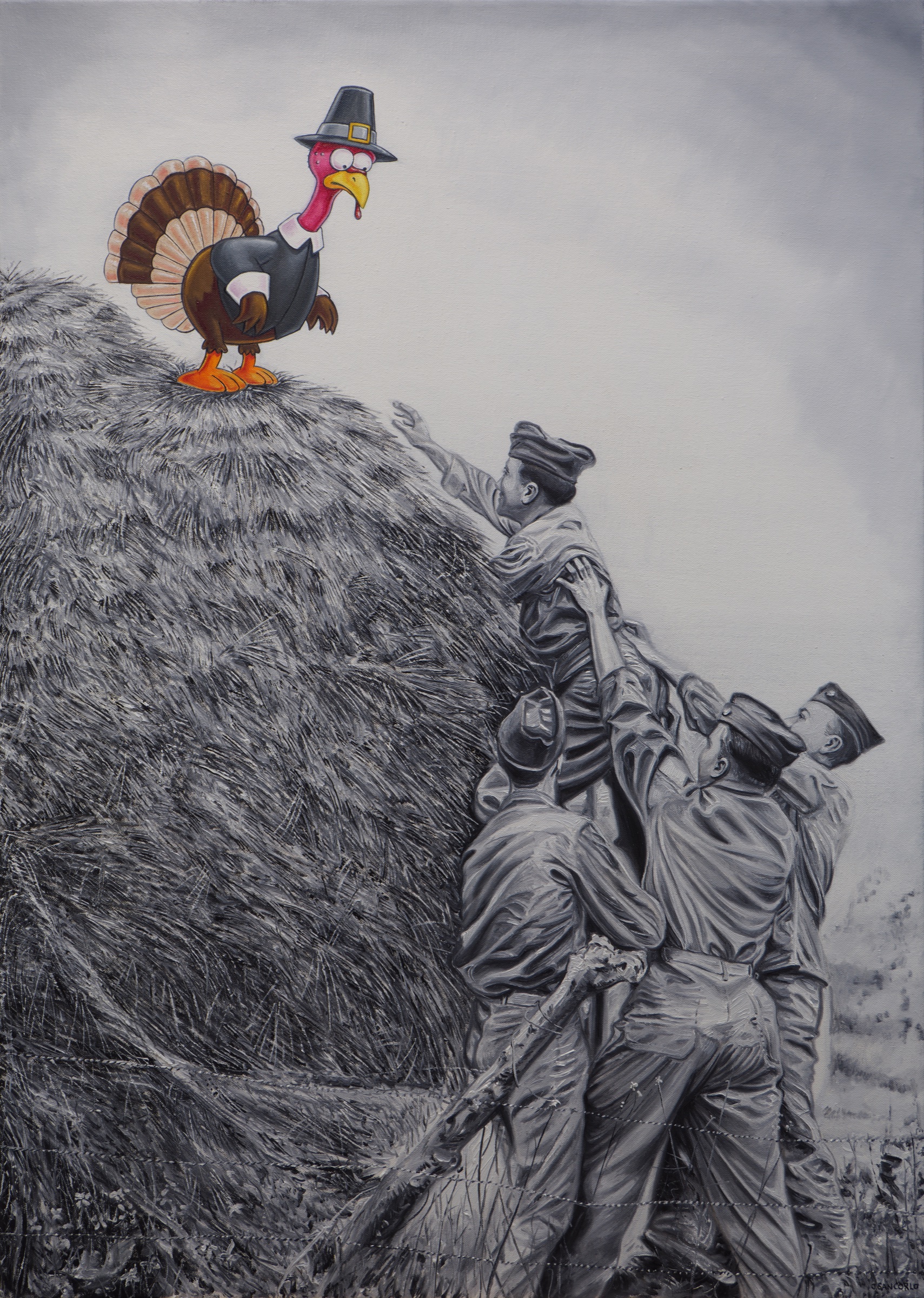
I'm interested in disrupting the solemnity of historical war imagery. By introducing colourful elements—often inspired by cartoons, pop culture, video games or American cinema—I create surreal and sometimes ironic situations inside otherwise rigid military scenes.
These playful intrusions represent traces of childhood: fragments of innocence entering spaces shaped entirely by the adult world and by war.
The contrast creates tension between discipline and absurdity, seriousness and humour, innocence and violence.
Childhood and the loss of innocence seem to be recurring themes in your work.
Yes, very much so. The people appearing in my paintings belong to difficult historical moments. They are immersed in war or military structures, realities entirely created by adults.
What fascinates me is imagining who these individuals were before all of this—before discipline, before violence, before ideology. They were once children too.
The colourful objects and characters I introduce into the compositions allude to that forgotten childhood. Through them, I reflect on the abrupt transition into adulthood and on how innocence disappears when confronted with the tragic dimensions of war.
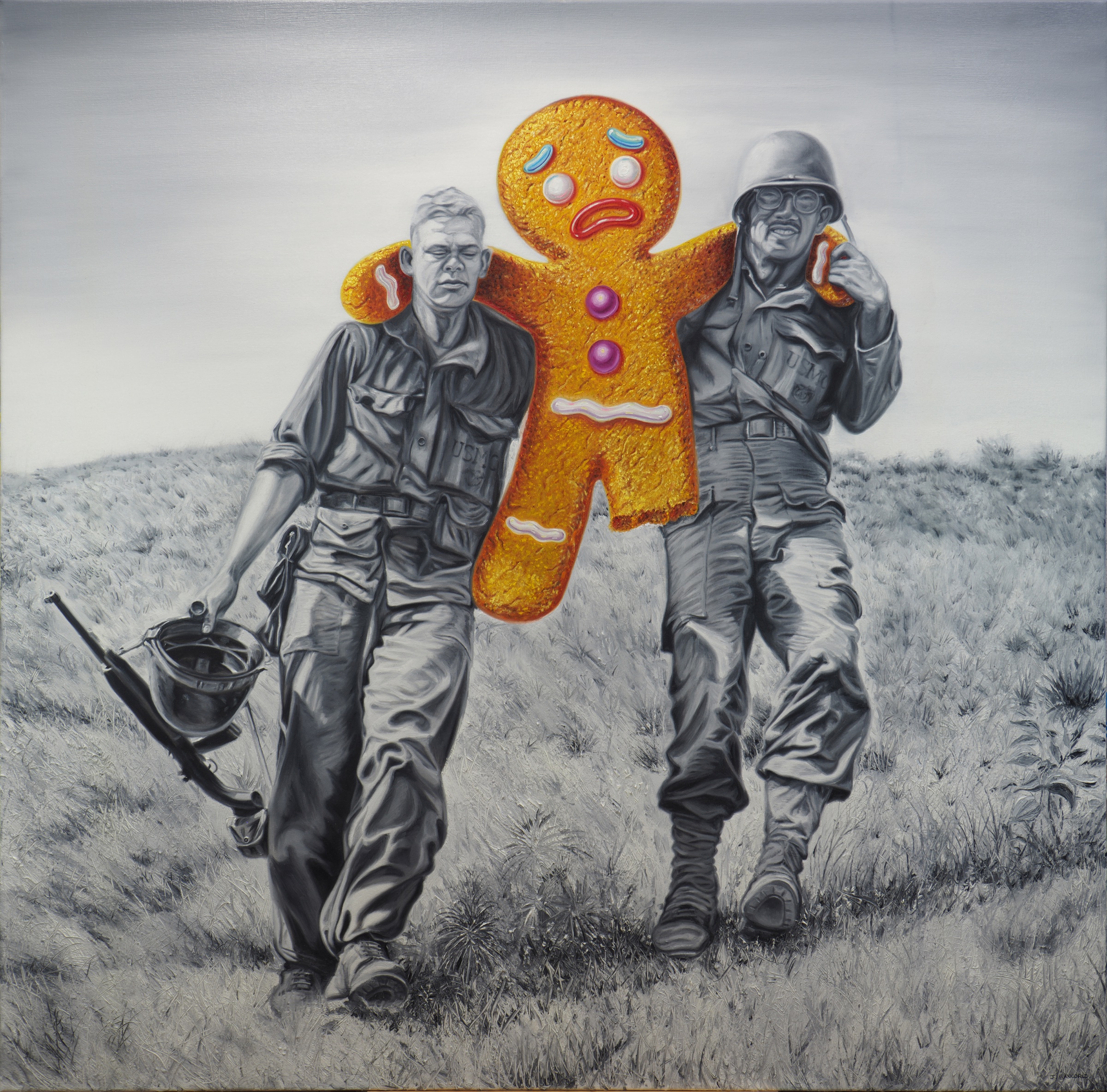
The Rescue, 120×120cm, 2023 — A tender yet surreal scene depicting an attempt to save innocence from the chaos of conflict, where childhood imagination collides with wartime reality.
There is humour in your work, but also discomfort. How do you see that balance?
Humour is important to me, but my work is not simply ironic or comedic. The grotesque situations I create are meant to generate ambiguity. They can appear playful at first glance, yet they coexist with images tied to violence, suffering and historical trauma.
That contradiction matters to me because war itself contains a kind of absurd logic. I'm interested in that uneasy space where attraction, discomfort, fascination and critique coexist.
Your work also seems to reflect a personal relationship with the military world.
Yes. I come from a family with a military tradition, so my relationship with that universe is complex. I feel both attraction and distance toward it.
On one side there is the solemnity, discipline and visual rigor of military culture—often expressed in monochrome tones. On the other, there is the rebellious and colourful intrusion of playful imagery.
My paintings exist somewhere between those two emotional poles.
What do you hope viewers experience when they encounter your work?
I hope the works invite reflection rather than provide direct answers. By juxtaposing animated, playful imagery with scenes from some of history's darkest periods, I try to create unexpected connections.
The paintings may initially appear ironic or visually striking, but beneath that surface lies a deeper reflection on memory, violence, childhood and the absurdity of armed conflict.
Ultimately, I want viewers to question how innocence is lost, how war shapes identity, and why humanity continues to repeat these cycles.
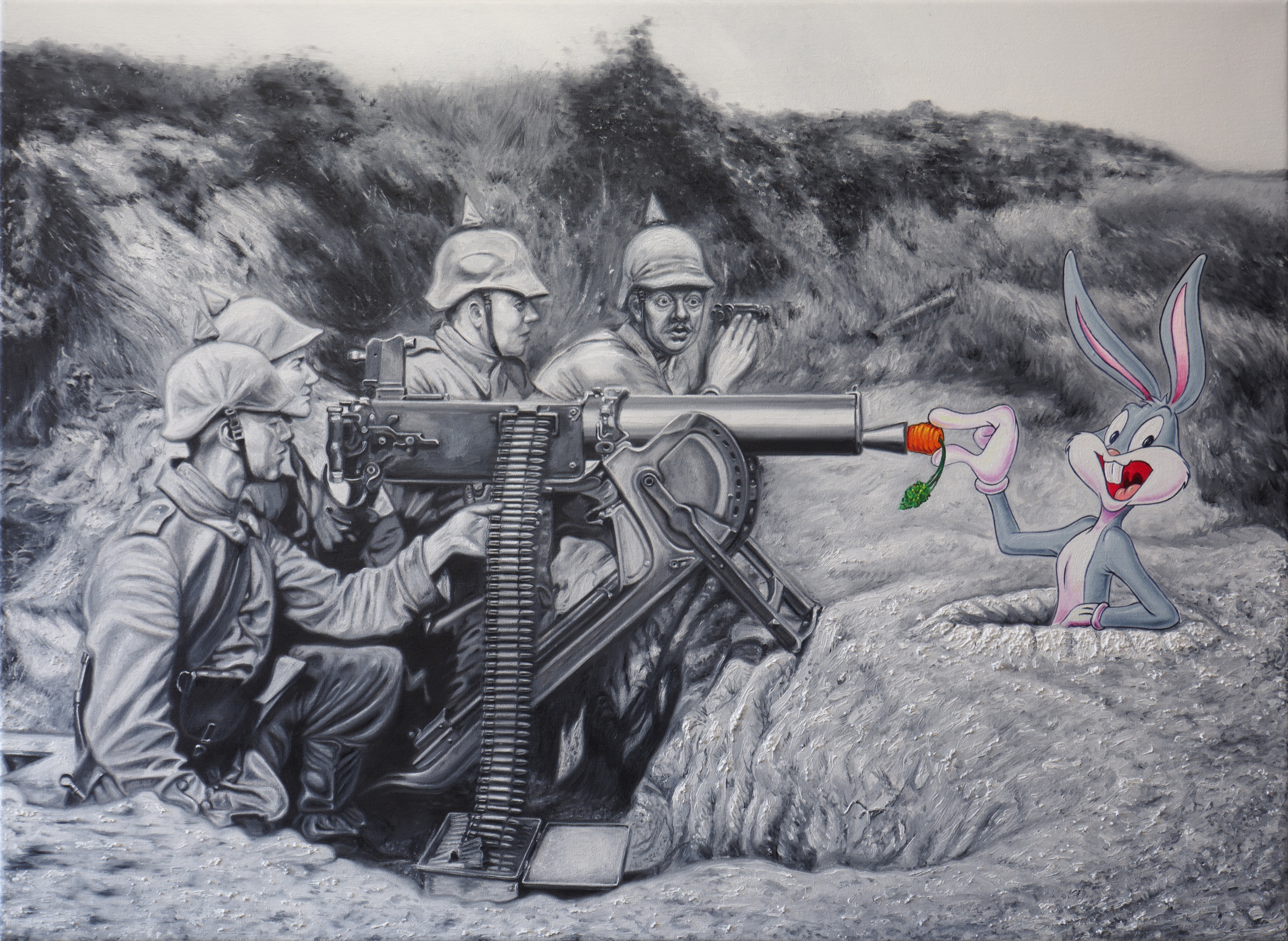
Of Course You Realize This Means War, 73×100cm, 2023 — A direct reference to wartime absurdity, where cartoon logic meets historical trauma in a composition that is both humorous and deeply unsettling.
About Jaime Sancorlo
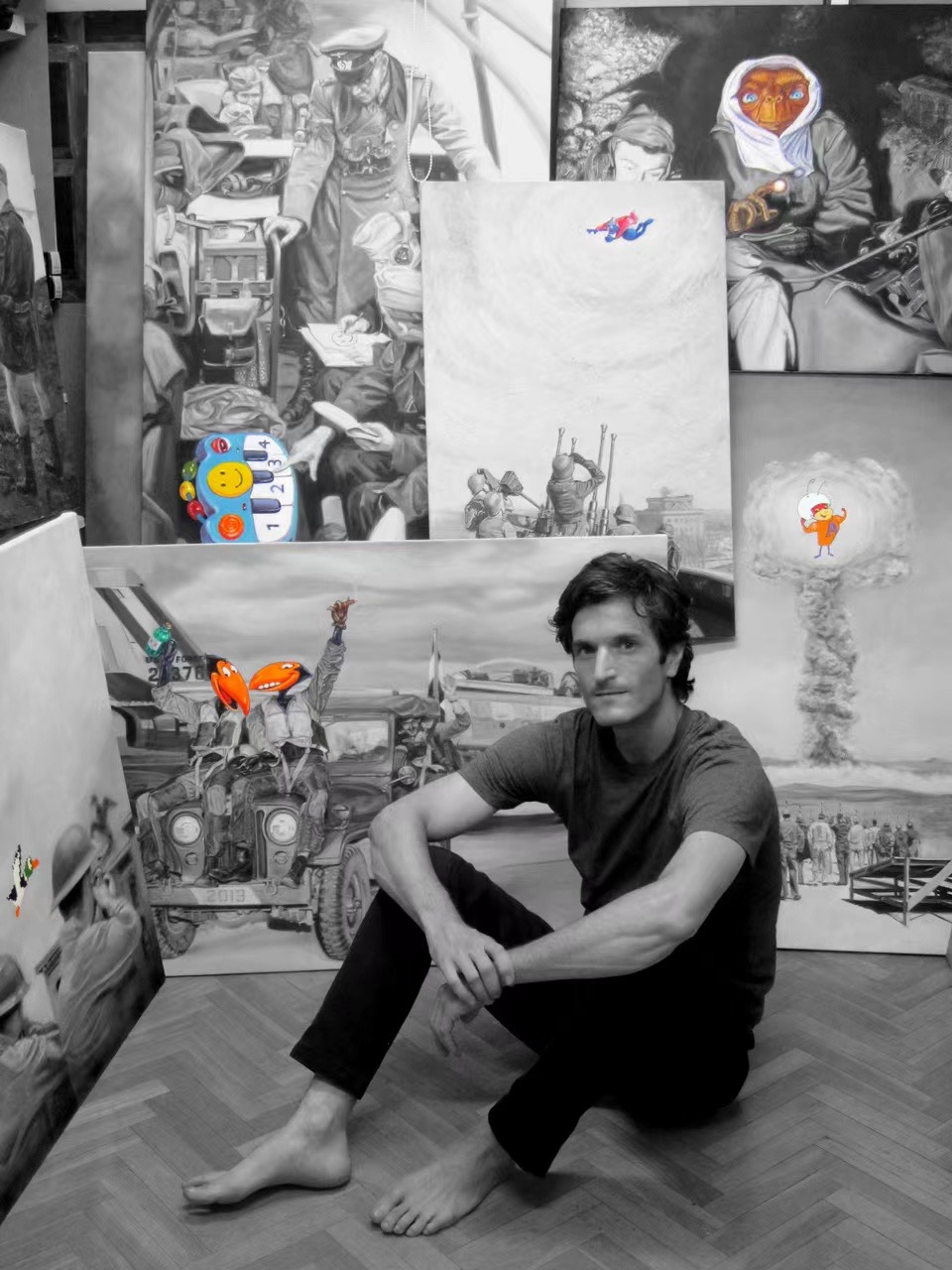
Jaime Sancorlo (b. 1985, Madrid) is a Spanish contemporary artist known for his surreal oil paintings that juxtapose historical war imagery with playful, colourful elements inspired by cartoons and pop culture.
His work begins with archival photographs from the First and Second World Wars, which he reinterprets through painting. By introducing animated characters, toys, and absurd situations into rigid military scenes, Sancorlo creates a tension between discipline and innocence, seriousness and humour.
Coming from a family with a military tradition, Sancorlo's relationship with the military world is complex—both attracted to its visual rigor and distanced by its inherent violence. This personal tension permeates his work, which reflects on the loss of childhood innocence and the absurdity of armed conflict.
Sancorlo's paintings have been exhibited across Europe and Asia. He currently lives and works in Madrid.
To inquire about any of the artists or works featured here, please email us at info@caelis.cn.
Related
Explore more on our Art Insight and Exhibitions pages.